Part One: Our Childhood Together
The brother I hardly grew up with.
Distance entered our relationship almost before it had time to form.
Dimpy is only a year younger than me, yet in many ways we never really grew up together.
I spent much of my early childhood in Gidderbaha with my maternal grandparents. When we were together at our parents' home in Tohana, we either stayed at home or went to a small day-care school that we simply knew as Bua's school.
Hardly had we begun spending time together when I left for boarding school at Sainik School Kunjpura.
From then on, our relationship was built around intervals. We met during my school holidays, and even those felt few and far between. Later, when I went to university and then engineering college, the pattern continued. I would come home, spend some time with Dimpy, and leave again.
We were brothers growing up in the same family, but rarely at the same time.
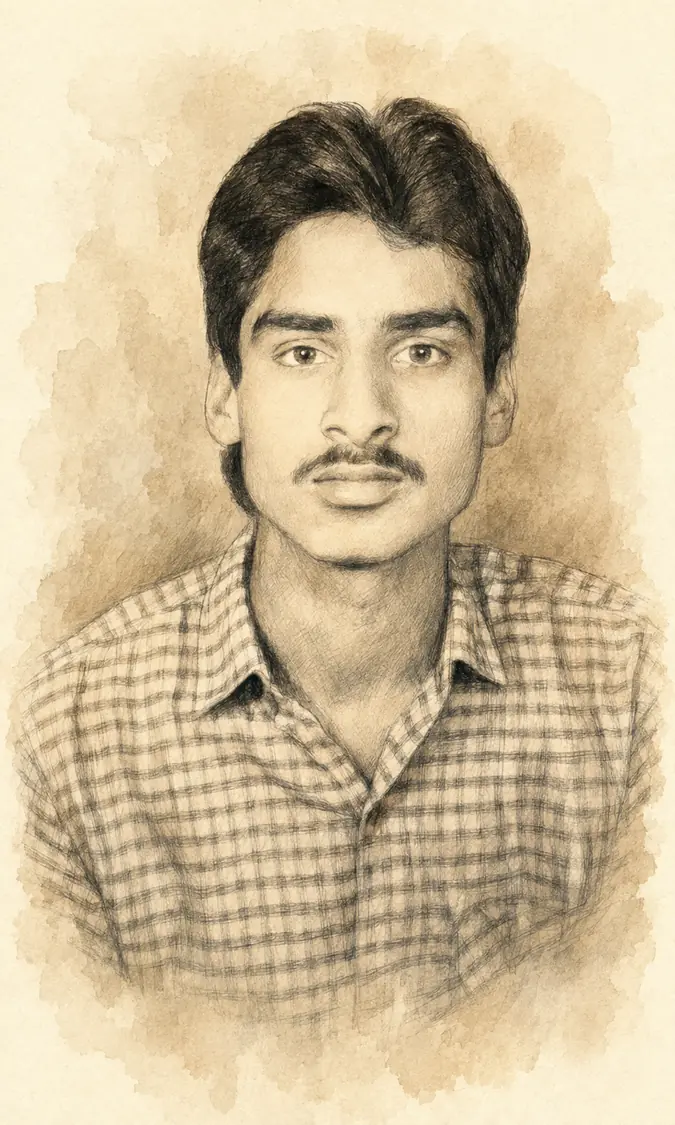
Our parents' expectations for us were different. I remember feeling that we were encouraged in different directions, and I have often looked back on that difference.
We grew up in the same family, but we did not have the same experience of it.
I noticed those different expectations. What they felt like to Dimpy is something only he can fully describe.
Dimpy was creative. I remember his imagination, and I sometimes wonder what he might have chosen with more encouragement to pursue art or drawing. In the world we grew up in, science was often considered the safer path.
He went on to train and work as a pharmacist.
By then, we were both in our twenties. Most of the years when brothers normally discover each other had already passed while I was away at school or college.
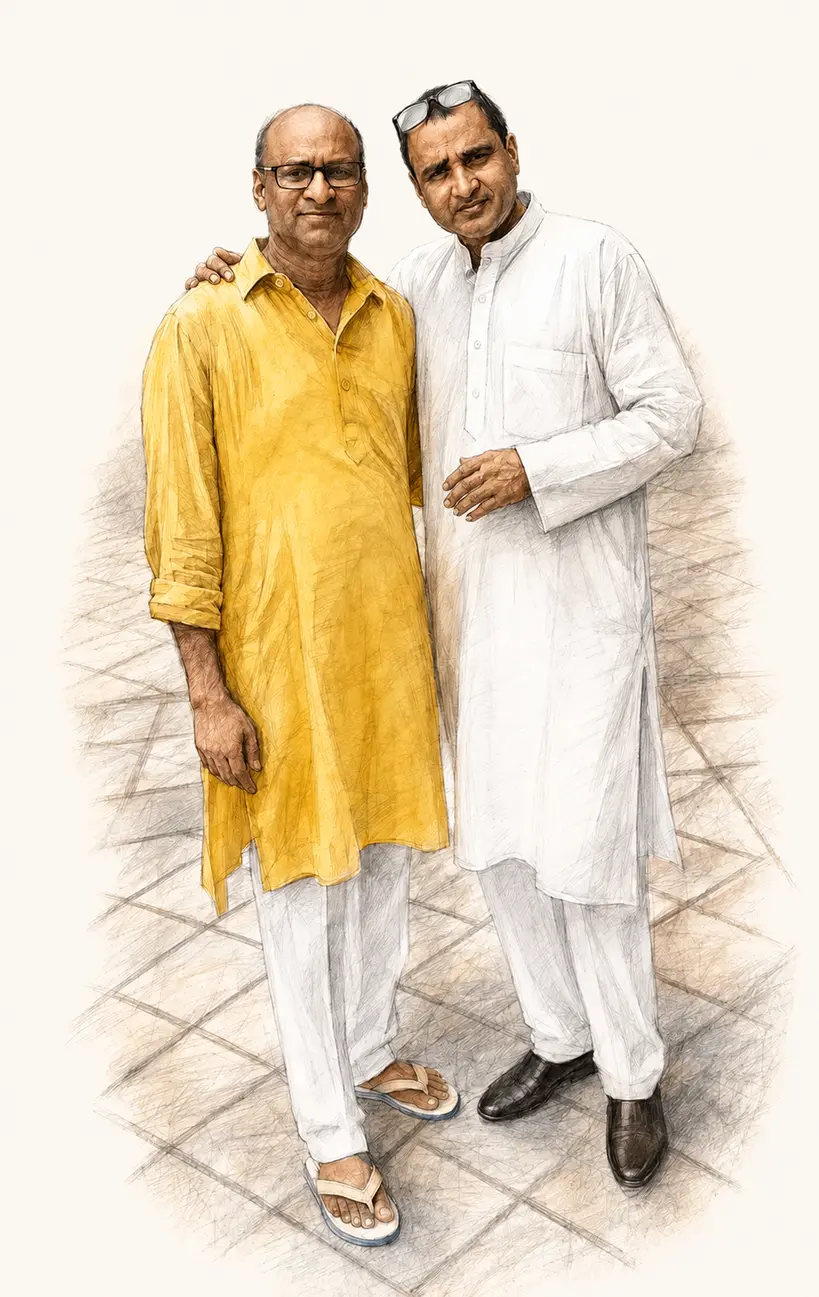
Still, I believe we were close. We simply did not know how to express it.
We both loved watching India play cricket. When a match clashed with our studies, we devised a wonderfully dishonest arrangement. One of us would study while the other watched television, and then we would exchange places. This allowed us to claim that we had both studied while ensuring that the match was never switched off.
We were also devoted Amitabh Bachchan fans. We would go out and buy his postcards, which cost fifty paisa in those days. Half a rupee bought us a small photograph of someone who seemed larger than life.
Some of our closest moments were never announced as closeness. They were simply a cricket match left playing and an Amitabh postcard carried home.
The thing I remember most clearly about Dimpy from those years is his quietness. We shared more than we ever said aloud.
We shared memories of home that needed little explanation. I remember turning to Mom for comfort, and I saw the closeness Dimpy shared with her too.
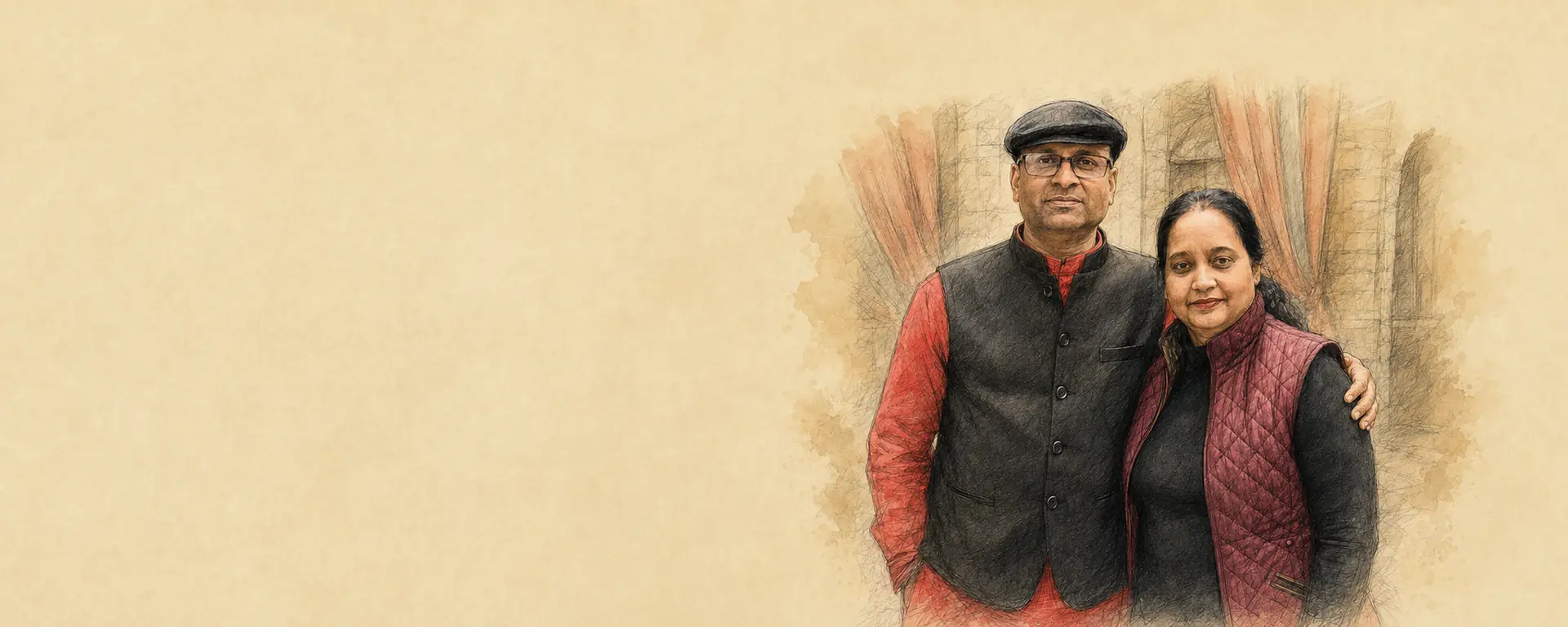
Our parents helped arrange his marriage to Rajni. Before long, our family was entering another chapter.
He married five years before I did.
I sometimes wish I had been more present during those early years. I wish I had asked more about his life instead of assuming I understood it. Later, as Rajni and eventually Rimpy became part of our family, our relationships found new ways to grow.
Perhaps I was too young, too occupied with my own studies and my own future. Perhaps the distance had trained both of us to accept silence as the natural language between us.
I cannot recover the childhood we did not share. I can only understand it better now.
The strange truth is that Dimpy and I were separated by circumstances long before either of us could choose differently. Yet something between us survived the schools, the distances, the expectations and all the words we never learned to say.
We did not grow up together in the usual sense.
But through brief holidays, cricket matches, Amitabh postcards and a quiet understanding of the home we both came from, we remained brothers.